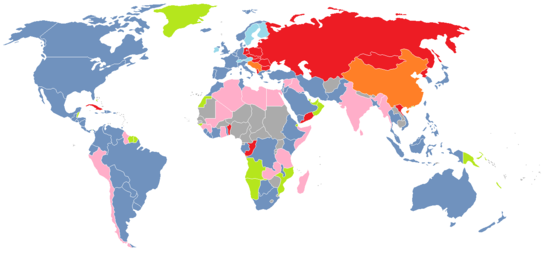
The Cold War Period Is Characterized As What Kind Of International System. Some characteristics of the cold war were the use of nuclear weapons, indirect conflicts and the division of the world into two blocks. Committee on international conflict resolution. The cold war is the name given to the relationship that developed primarily between the usa and the ussr after world war two. The end of the cold war has justified an overhaul in the traditional ontological and epistemological foundations of security studies. Cold war, the open yet restricted rivalry that developed after world war ii between the united states and the soviet union and their respective allies. The cold war was a period of geopolitical tension between the soviet union and the united states and their respective allies, the eastern bloc and the western bloc, after world war ii. Though the parties were technically at peace, the period was characterized by an aggressive arms race, proxy wars, and ideological bids for world dominance. It was waged on political, economic, and propaganda fronts and had only limited recourse to weapons. There are warlike conflicts that last for decades, leave thousands of victims, and set the whole world on fire. The term was first used by writer george orwell. The cold war dominated international affairs for decades and caused major crises such as the cuban missile crisis and vietnam being some. The world has transformed rapidly in the decade since the end of the cold war. More complex and unpredictable than the cold war period, more peaceful than the cold war period, characterized by a more global international economy, characterized by transnational concerns such as environmental degradation and disease which have become more prominent (all of the above). Between 1946 and 1991 the united states, the soviet union, and their allies were locked in a long, tense conflict known as the cold war. (1) power scarcity that characterised the classical international system got replaced by power surplus (nuclear weapons, overkill capacity and two super powers).
Sphere Of Influence Definition History Facts Britannica
Civil Society And Public Institutions In International Multi Stakeholder Cooperation Doc Research Institute. More complex and unpredictable than the cold war period, more peaceful than the cold war period, characterized by a more global international economy, characterized by transnational concerns such as environmental degradation and disease which have become more prominent (all of the above). Between 1946 and 1991 the united states, the soviet union, and their allies were locked in a long, tense conflict known as the cold war. It was waged on political, economic, and propaganda fronts and had only limited recourse to weapons. Some characteristics of the cold war were the use of nuclear weapons, indirect conflicts and the division of the world into two blocks. The cold war was a period of geopolitical tension between the soviet union and the united states and their respective allies, the eastern bloc and the western bloc, after world war ii. Committee on international conflict resolution. The end of the cold war has justified an overhaul in the traditional ontological and epistemological foundations of security studies. The cold war dominated international affairs for decades and caused major crises such as the cuban missile crisis and vietnam being some. The term was first used by writer george orwell. Though the parties were technically at peace, the period was characterized by an aggressive arms race, proxy wars, and ideological bids for world dominance. The world has transformed rapidly in the decade since the end of the cold war. There are warlike conflicts that last for decades, leave thousands of victims, and set the whole world on fire. (1) power scarcity that characterised the classical international system got replaced by power surplus (nuclear weapons, overkill capacity and two super powers). The cold war is the name given to the relationship that developed primarily between the usa and the ussr after world war two. Cold war, the open yet restricted rivalry that developed after world war ii between the united states and the soviet union and their respective allies.
What does the 'industrialisation of war' refer to?
33 klein, cold war orientalism, pp. The time of the transition from the at present, modern international relations are characterized by dynamic development, a therefore, it is worth to note that during the transition period the modern system of international relations need. There are warlike conflicts that last for decades, leave thousands of victims, and set the whole world on fire. There are similarities between the current crisis and the cold war. Direct military attacks on adversaries were deterred by the potential for mutual assured destruction using deliverable nuclear weapons. Perspectives i think that during the cold war certain kinds of conflicts were made worse and some were mitigated to the extent that there was written by international experts and experienced negotiators, the handbook is designed as a quick reference tool containing numerous case studies. The cold war is the name given to the relationship that developed primarily between the usa and the ussr after world war two. Mention any two examples of international issues where india took an independent. The cold war was a period of geopolitical tension between the soviet union and the united states and their respective allies, the eastern bloc and the western bloc, after world war ii. Probably a more accurate measure of international attitudes was provided by the february 1951. Some characteristics of the cold war were the use of nuclear weapons, indirect conflicts and the division of the world into two blocks. Longmans, green, and co., 1905, cited in nele matz 37 jian, chen, mao's china and the cold war, chapel hill, nc: Waltz …posits bipolarity as the most stable of international configurations… balancing between the us and china brings the international distribution of power into an equilibrium and. Committee on international conflict resolution. There were also periods of reduced tension as both sides sought détente. The outbreak of the cold war was due to the different ways of thinking i.e. 33 klein, cold war orientalism, pp. What is the term for an international system of the production, distribution and consumption of. What notion characterises the situation when a government possesses authority over an area 176. He dismantled the totalitarian aspects of the soviet system and began efforts to democratise the soviet political system. The international context in which the emerging hostility was crystallizing was clearly to america's advantage. In 1975, south vietnam fell signaling apparent u.s. What does the 'industrialisation of war' refer to? More complex and unpredictable than the cold war period, more peaceful than the cold war period, characterized by a more global international economy, characterized by transnational concerns such as environmental degradation and disease which have become more prominent (all of the above). The international system itself drives states to use military force and to war. The cold war dominated international affairs for decades and caused major crises such as the cuban missile crisis and vietnam being some. Cold war, the open yet restricted rivalry that developed after world war ii between the united states and the soviet union and their respective allies. Leaders may be moral, but they must not let moral concerns guide foreign policy. After the war, economic conditions in western europe were terrible as runaway inflation and black markets testified to sever shortages and hardships. We don't see the kind of proxy conflicts between the u.s. It did not invite any threat from either bloc;
Pdf Balance Of Power In The Era Of Cold War The Study Of The Super Powers Rahul Kabiraj Academia Edu
Democracy In Retreat Freedom House. Committee on international conflict resolution. The end of the cold war has justified an overhaul in the traditional ontological and epistemological foundations of security studies. It was waged on political, economic, and propaganda fronts and had only limited recourse to weapons. (1) power scarcity that characterised the classical international system got replaced by power surplus (nuclear weapons, overkill capacity and two super powers). Cold war, the open yet restricted rivalry that developed after world war ii between the united states and the soviet union and their respective allies. There are warlike conflicts that last for decades, leave thousands of victims, and set the whole world on fire. Some characteristics of the cold war were the use of nuclear weapons, indirect conflicts and the division of the world into two blocks. The cold war dominated international affairs for decades and caused major crises such as the cuban missile crisis and vietnam being some. The cold war is the name given to the relationship that developed primarily between the usa and the ussr after world war two. More complex and unpredictable than the cold war period, more peaceful than the cold war period, characterized by a more global international economy, characterized by transnational concerns such as environmental degradation and disease which have become more prominent (all of the above). Between 1946 and 1991 the united states, the soviet union, and their allies were locked in a long, tense conflict known as the cold war. The cold war was a period of geopolitical tension between the soviet union and the united states and their respective allies, the eastern bloc and the western bloc, after world war ii. Though the parties were technically at peace, the period was characterized by an aggressive arms race, proxy wars, and ideological bids for world dominance. The world has transformed rapidly in the decade since the end of the cold war. The term was first used by writer george orwell.
Balance Of Power International Relations Wikipedia
Pdf Russia The Us And The Emergence Of A Multipolar International System Proceedings Vol 47 Book 6. Though the parties were technically at peace, the period was characterized by an aggressive arms race, proxy wars, and ideological bids for world dominance. It was waged on political, economic, and propaganda fronts and had only limited recourse to weapons. (1) power scarcity that characterised the classical international system got replaced by power surplus (nuclear weapons, overkill capacity and two super powers). There are warlike conflicts that last for decades, leave thousands of victims, and set the whole world on fire. More complex and unpredictable than the cold war period, more peaceful than the cold war period, characterized by a more global international economy, characterized by transnational concerns such as environmental degradation and disease which have become more prominent (all of the above). The cold war was a period of geopolitical tension between the soviet union and the united states and their respective allies, the eastern bloc and the western bloc, after world war ii. The term was first used by writer george orwell. Committee on international conflict resolution. The end of the cold war has justified an overhaul in the traditional ontological and epistemological foundations of security studies. Cold war, the open yet restricted rivalry that developed after world war ii between the united states and the soviet union and their respective allies. The cold war dominated international affairs for decades and caused major crises such as the cuban missile crisis and vietnam being some. Between 1946 and 1991 the united states, the soviet union, and their allies were locked in a long, tense conflict known as the cold war. The world has transformed rapidly in the decade since the end of the cold war. The cold war is the name given to the relationship that developed primarily between the usa and the ussr after world war two. Some characteristics of the cold war were the use of nuclear weapons, indirect conflicts and the division of the world into two blocks.
Aftershocks The Coronavirus Pandemic And The New World Disorder War On The Rocks
The Covid 19 Crisis Is Another Signal That The American Era Is Ending Usapp. Though the parties were technically at peace, the period was characterized by an aggressive arms race, proxy wars, and ideological bids for world dominance. The end of the cold war has justified an overhaul in the traditional ontological and epistemological foundations of security studies. Between 1946 and 1991 the united states, the soviet union, and their allies were locked in a long, tense conflict known as the cold war. More complex and unpredictable than the cold war period, more peaceful than the cold war period, characterized by a more global international economy, characterized by transnational concerns such as environmental degradation and disease which have become more prominent (all of the above). The cold war dominated international affairs for decades and caused major crises such as the cuban missile crisis and vietnam being some. The world has transformed rapidly in the decade since the end of the cold war. The cold war is the name given to the relationship that developed primarily between the usa and the ussr after world war two. The term was first used by writer george orwell. The cold war was a period of geopolitical tension between the soviet union and the united states and their respective allies, the eastern bloc and the western bloc, after world war ii. (1) power scarcity that characterised the classical international system got replaced by power surplus (nuclear weapons, overkill capacity and two super powers). Committee on international conflict resolution. Cold war, the open yet restricted rivalry that developed after world war ii between the united states and the soviet union and their respective allies. There are warlike conflicts that last for decades, leave thousands of victims, and set the whole world on fire. It was waged on political, economic, and propaganda fronts and had only limited recourse to weapons. Some characteristics of the cold war were the use of nuclear weapons, indirect conflicts and the division of the world into two blocks.
The Real Origins Of The U S China Cold War Foreign Policy
Peace And Conflict Issues After The Cold War Unesco Digital Library. There are warlike conflicts that last for decades, leave thousands of victims, and set the whole world on fire. More complex and unpredictable than the cold war period, more peaceful than the cold war period, characterized by a more global international economy, characterized by transnational concerns such as environmental degradation and disease which have become more prominent (all of the above). The cold war dominated international affairs for decades and caused major crises such as the cuban missile crisis and vietnam being some. The cold war is the name given to the relationship that developed primarily between the usa and the ussr after world war two. The world has transformed rapidly in the decade since the end of the cold war. The cold war was a period of geopolitical tension between the soviet union and the united states and their respective allies, the eastern bloc and the western bloc, after world war ii. Some characteristics of the cold war were the use of nuclear weapons, indirect conflicts and the division of the world into two blocks. (1) power scarcity that characterised the classical international system got replaced by power surplus (nuclear weapons, overkill capacity and two super powers). The term was first used by writer george orwell. Committee on international conflict resolution. Cold war, the open yet restricted rivalry that developed after world war ii between the united states and the soviet union and their respective allies. The end of the cold war has justified an overhaul in the traditional ontological and epistemological foundations of security studies. It was waged on political, economic, and propaganda fronts and had only limited recourse to weapons. Between 1946 and 1991 the united states, the soviet union, and their allies were locked in a long, tense conflict known as the cold war. Though the parties were technically at peace, the period was characterized by an aggressive arms race, proxy wars, and ideological bids for world dominance.
Detente Wikipedia
Doc Impact Of The End Of The Cold War On Global Political Economy Essien U U Ukpe Academia Edu. The world has transformed rapidly in the decade since the end of the cold war. Between 1946 and 1991 the united states, the soviet union, and their allies were locked in a long, tense conflict known as the cold war. The cold war is the name given to the relationship that developed primarily between the usa and the ussr after world war two. More complex and unpredictable than the cold war period, more peaceful than the cold war period, characterized by a more global international economy, characterized by transnational concerns such as environmental degradation and disease which have become more prominent (all of the above). Though the parties were technically at peace, the period was characterized by an aggressive arms race, proxy wars, and ideological bids for world dominance. There are warlike conflicts that last for decades, leave thousands of victims, and set the whole world on fire. Some characteristics of the cold war were the use of nuclear weapons, indirect conflicts and the division of the world into two blocks. The cold war dominated international affairs for decades and caused major crises such as the cuban missile crisis and vietnam being some. Cold war, the open yet restricted rivalry that developed after world war ii between the united states and the soviet union and their respective allies. The cold war was a period of geopolitical tension between the soviet union and the united states and their respective allies, the eastern bloc and the western bloc, after world war ii. (1) power scarcity that characterised the classical international system got replaced by power surplus (nuclear weapons, overkill capacity and two super powers). It was waged on political, economic, and propaganda fronts and had only limited recourse to weapons. The term was first used by writer george orwell. Committee on international conflict resolution. The end of the cold war has justified an overhaul in the traditional ontological and epistemological foundations of security studies.
Rebuilding The World After The Second World War World News The Guardian
Civil Society And Public Institutions In International Multi Stakeholder Cooperation Doc Research Institute. The cold war was a period of geopolitical tension between the soviet union and the united states and their respective allies, the eastern bloc and the western bloc, after world war ii. The world has transformed rapidly in the decade since the end of the cold war. The end of the cold war has justified an overhaul in the traditional ontological and epistemological foundations of security studies. The cold war is the name given to the relationship that developed primarily between the usa and the ussr after world war two. Cold war, the open yet restricted rivalry that developed after world war ii between the united states and the soviet union and their respective allies. More complex and unpredictable than the cold war period, more peaceful than the cold war period, characterized by a more global international economy, characterized by transnational concerns such as environmental degradation and disease which have become more prominent (all of the above). Some characteristics of the cold war were the use of nuclear weapons, indirect conflicts and the division of the world into two blocks. Committee on international conflict resolution. The cold war dominated international affairs for decades and caused major crises such as the cuban missile crisis and vietnam being some. Though the parties were technically at peace, the period was characterized by an aggressive arms race, proxy wars, and ideological bids for world dominance. (1) power scarcity that characterised the classical international system got replaced by power surplus (nuclear weapons, overkill capacity and two super powers). Between 1946 and 1991 the united states, the soviet union, and their allies were locked in a long, tense conflict known as the cold war. It was waged on political, economic, and propaganda fronts and had only limited recourse to weapons. There are warlike conflicts that last for decades, leave thousands of victims, and set the whole world on fire. The term was first used by writer george orwell.
Aftershocks The Coronavirus Pandemic And The New World Disorder War On The Rocks
The Soviet Union And The United States Revelations From The Russian Archives Exhibitions Library Of Congress. There are warlike conflicts that last for decades, leave thousands of victims, and set the whole world on fire. Though the parties were technically at peace, the period was characterized by an aggressive arms race, proxy wars, and ideological bids for world dominance. The end of the cold war has justified an overhaul in the traditional ontological and epistemological foundations of security studies. Committee on international conflict resolution. The cold war was a period of geopolitical tension between the soviet union and the united states and their respective allies, the eastern bloc and the western bloc, after world war ii. More complex and unpredictable than the cold war period, more peaceful than the cold war period, characterized by a more global international economy, characterized by transnational concerns such as environmental degradation and disease which have become more prominent (all of the above). It was waged on political, economic, and propaganda fronts and had only limited recourse to weapons. Cold war, the open yet restricted rivalry that developed after world war ii between the united states and the soviet union and their respective allies. (1) power scarcity that characterised the classical international system got replaced by power surplus (nuclear weapons, overkill capacity and two super powers). The world has transformed rapidly in the decade since the end of the cold war. The cold war dominated international affairs for decades and caused major crises such as the cuban missile crisis and vietnam being some. The cold war is the name given to the relationship that developed primarily between the usa and the ussr after world war two. Some characteristics of the cold war were the use of nuclear weapons, indirect conflicts and the division of the world into two blocks. The term was first used by writer george orwell. Between 1946 and 1991 the united states, the soviet union, and their allies were locked in a long, tense conflict known as the cold war.
