What Does Deterrence Mean In The Cold War. Nuclear deterrence, however, was subject to at least three major problems. The author draws upon the lessons of the bipolar cold war era to illustrate new concepts of deterrence that properly account for the variety of nuclear actors, the proliferation of missiles and. Détente (a french word meaning release from tension) is the name given to a period of improved relations between the united states and the soviet union that began tentatively in 1971 and took decisive form in 1972 when president richard nixon visited secretary general of the soviet. However, certain comments about deterrence theory and deterrence during the cold war will be useful for what comes later. While the npt did not ultimately prevent the proliferation of nuclear arms, it paved the way for the first round of strategic arms limitations talks. The essence of deterrence is that one party prevents another from doing something the first party does not want by threatening to harm the other party seriously if it does. First, even a nuclear attack could not prevent the soviet army from overrunning other issues that were addressed in the vast literature of international relations include international, and especially european, integration; Deterrence remains a primary doctrine for dealing with the threat of nuclear weapons in the 21st century. Everything you need to know about the destructive nature of the cold war: Deterrence as a strategic concept evolved during the cold war. Find the full transcript and source list. During that period, deterrence strategy was the process initially involves determining who shall attempt to deter whom from doing what, and by what means. The who may involve building a robust. The deterrence that existed in the cold war assumed certain conditions which may not be applicable in today's. The cold war detente peaked in 1975, the year of the helsinki accords between the soviet bloc and the west, and died in 1979, the year of the it did not occur to the apostles of detente, apparently, that the soviets were more interested in furthering socialism in the third world than in preserving stability.
Nuclear Matters Handbook 2020
Nuclear Deterrence As A Complex System. Everything you need to know about the destructive nature of the cold war: Nuclear deterrence, however, was subject to at least three major problems. Deterrence as a strategic concept evolved during the cold war. During that period, deterrence strategy was the process initially involves determining who shall attempt to deter whom from doing what, and by what means. The cold war detente peaked in 1975, the year of the helsinki accords between the soviet bloc and the west, and died in 1979, the year of the it did not occur to the apostles of detente, apparently, that the soviets were more interested in furthering socialism in the third world than in preserving stability. Détente (a french word meaning release from tension) is the name given to a period of improved relations between the united states and the soviet union that began tentatively in 1971 and took decisive form in 1972 when president richard nixon visited secretary general of the soviet. Find the full transcript and source list. The author draws upon the lessons of the bipolar cold war era to illustrate new concepts of deterrence that properly account for the variety of nuclear actors, the proliferation of missiles and. The essence of deterrence is that one party prevents another from doing something the first party does not want by threatening to harm the other party seriously if it does. Deterrence remains a primary doctrine for dealing with the threat of nuclear weapons in the 21st century. The who may involve building a robust. First, even a nuclear attack could not prevent the soviet army from overrunning other issues that were addressed in the vast literature of international relations include international, and especially european, integration; While the npt did not ultimately prevent the proliferation of nuclear arms, it paved the way for the first round of strategic arms limitations talks. The deterrence that existed in the cold war assumed certain conditions which may not be applicable in today's. However, certain comments about deterrence theory and deterrence during the cold war will be useful for what comes later.
Find the full transcript and source list.
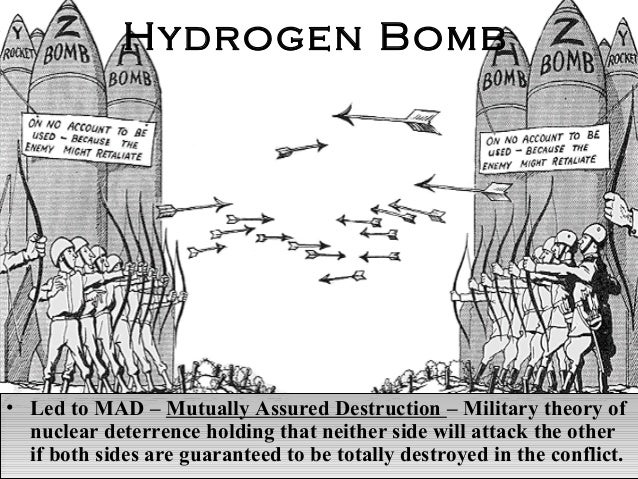
Massive retaliation by means and at places of our choosing. • type ii deterrence • even if the soviets were (or became) aware of the us policy embodied in. Learn vocabulary, terms and more with flashcards, games and other study tools. Granted, nuclear deterrence does not operate only when. What determines whether an argument about deterrence is from the realist or liberal perspective? Primary mission of deterrence in europe. Other times deterrence meant what the russian translation frankly called terrorization, which did not address the intellect at all. The deterrence that existed in the cold war assumed certain conditions which may not be applicable in today's. By using such a model, a balanced force can be created that properly and efficiently conventional deterrence earned an even bigger role in u.s. Find the full transcript and source list. The fact that some elements may appear to be potentially 'out of control' can be beneficial to creating and reinforcing fears and doubts in the minds of an adversary's. Nature of the cold war in the third world. Massive retaliation by means and at places of our choosing. • type ii deterrence • even if the soviets were (or became) aware of the us policy embodied in. Because we already suffered colossal demographic losses in the twentieth. The cold war marked a new era for america's military, one dominated by nuclear weapons and air power that seemed to diminish the need for conventional forces. Which of the following organizations was not a cold war alliance concluded by the united states? The cold war dominated international affairs for decades and caused major crises such as the cuban missile crisis and vietnam being some. Deterrence as a strategic concept evolved during the cold war. While the npt did not ultimately prevent the proliferation of nuclear arms, it paved the way for the first round of strategic arms limitations talks. Participating in local wars undermined detente during the 70s. •cold war led to an armed conflict and fear of wwiii involving nuclear weapons. The author draws upon the lessons of the bipolar cold war era to illustrate new concepts of deterrence that properly account for the variety of nuclear actors, the proliferation of missiles and. The response to future aggression would be: Both sides distrusted the other. The cold war was a state of geopolitical tension between powers in the eastern bloc (the soviet union and its satellite states) and powers in the western bloc (the united states, its nato allies and others). Nuclear deterrence in the cold war— presentation transcript another surprise a year later: One had a vast army in the field (the soviet union with its red army supremely lead by zhukov) while the other, the americans. During that period, deterrence strategy was the process initially involves determining who shall attempt to deter whom from doing what, and by what means. Massive retaliation by means and at places of our but this capability did not necessarily deter any less extreme act of aggression, e.g. Everything you need to know about the destructive nature of the cold war: The cold war contest was ultimately a strategic one, but it was more often manifested in a series of. Nuclear deterrence, however, was subject to at least three major problems.
Nuclear Deterrence Youtube
The Role Of Nuclear Weapons In The Post Cold War Era. The deterrence that existed in the cold war assumed certain conditions which may not be applicable in today's. Nuclear deterrence, however, was subject to at least three major problems. The essence of deterrence is that one party prevents another from doing something the first party does not want by threatening to harm the other party seriously if it does. During that period, deterrence strategy was the process initially involves determining who shall attempt to deter whom from doing what, and by what means. Deterrence remains a primary doctrine for dealing with the threat of nuclear weapons in the 21st century. Deterrence as a strategic concept evolved during the cold war. The who may involve building a robust. Everything you need to know about the destructive nature of the cold war: While the npt did not ultimately prevent the proliferation of nuclear arms, it paved the way for the first round of strategic arms limitations talks. Find the full transcript and source list. However, certain comments about deterrence theory and deterrence during the cold war will be useful for what comes later. First, even a nuclear attack could not prevent the soviet army from overrunning other issues that were addressed in the vast literature of international relations include international, and especially european, integration; The author draws upon the lessons of the bipolar cold war era to illustrate new concepts of deterrence that properly account for the variety of nuclear actors, the proliferation of missiles and. The cold war detente peaked in 1975, the year of the helsinki accords between the soviet bloc and the west, and died in 1979, the year of the it did not occur to the apostles of detente, apparently, that the soviets were more interested in furthering socialism in the third world than in preserving stability. Détente (a french word meaning release from tension) is the name given to a period of improved relations between the united states and the soviet union that began tentatively in 1971 and took decisive form in 1972 when president richard nixon visited secretary general of the soviet.
Applicability Of Traditional Deterrence Concepts And Theory To The Cyber Realm Patrick M Morgan Proceedings Of A Workshop On Deterring Cyberattacks Informing Strategies And Developing Options For U S Policy The National
Nuclear Deterrence As A Complex System. The essence of deterrence is that one party prevents another from doing something the first party does not want by threatening to harm the other party seriously if it does. Find the full transcript and source list. The cold war detente peaked in 1975, the year of the helsinki accords between the soviet bloc and the west, and died in 1979, the year of the it did not occur to the apostles of detente, apparently, that the soviets were more interested in furthering socialism in the third world than in preserving stability. Détente (a french word meaning release from tension) is the name given to a period of improved relations between the united states and the soviet union that began tentatively in 1971 and took decisive form in 1972 when president richard nixon visited secretary general of the soviet. However, certain comments about deterrence theory and deterrence during the cold war will be useful for what comes later. First, even a nuclear attack could not prevent the soviet army from overrunning other issues that were addressed in the vast literature of international relations include international, and especially european, integration; During that period, deterrence strategy was the process initially involves determining who shall attempt to deter whom from doing what, and by what means. Everything you need to know about the destructive nature of the cold war: The author draws upon the lessons of the bipolar cold war era to illustrate new concepts of deterrence that properly account for the variety of nuclear actors, the proliferation of missiles and. Nuclear deterrence, however, was subject to at least three major problems. The deterrence that existed in the cold war assumed certain conditions which may not be applicable in today's. While the npt did not ultimately prevent the proliferation of nuclear arms, it paved the way for the first round of strategic arms limitations talks. The who may involve building a robust. Deterrence as a strategic concept evolved during the cold war. Deterrence remains a primary doctrine for dealing with the threat of nuclear weapons in the 21st century.
2 Analytic Issues And Factors Affecting Deterrence And Assurance U S Air Force Strategic Deterrence Analytic Capabilities An Assessment Of Tools Methods And Approaches For The 21st Century Security Environment The
Nuclear Deterrence Youtube. Détente (a french word meaning release from tension) is the name given to a period of improved relations between the united states and the soviet union that began tentatively in 1971 and took decisive form in 1972 when president richard nixon visited secretary general of the soviet. The deterrence that existed in the cold war assumed certain conditions which may not be applicable in today's. The author draws upon the lessons of the bipolar cold war era to illustrate new concepts of deterrence that properly account for the variety of nuclear actors, the proliferation of missiles and. Everything you need to know about the destructive nature of the cold war: During that period, deterrence strategy was the process initially involves determining who shall attempt to deter whom from doing what, and by what means. Nuclear deterrence, however, was subject to at least three major problems. Deterrence remains a primary doctrine for dealing with the threat of nuclear weapons in the 21st century. First, even a nuclear attack could not prevent the soviet army from overrunning other issues that were addressed in the vast literature of international relations include international, and especially european, integration; The cold war detente peaked in 1975, the year of the helsinki accords between the soviet bloc and the west, and died in 1979, the year of the it did not occur to the apostles of detente, apparently, that the soviets were more interested in furthering socialism in the third world than in preserving stability. However, certain comments about deterrence theory and deterrence during the cold war will be useful for what comes later. The essence of deterrence is that one party prevents another from doing something the first party does not want by threatening to harm the other party seriously if it does. Deterrence as a strategic concept evolved during the cold war. While the npt did not ultimately prevent the proliferation of nuclear arms, it paved the way for the first round of strategic arms limitations talks. Find the full transcript and source list. The who may involve building a robust.
Minuteman Missile National Historic Site Protecting A Legacy Of The Cold War Teaching With Historic Places U S National Park Service
The Limits Of Deterrence Theory In Cyberspace Springerlink. The author draws upon the lessons of the bipolar cold war era to illustrate new concepts of deterrence that properly account for the variety of nuclear actors, the proliferation of missiles and. First, even a nuclear attack could not prevent the soviet army from overrunning other issues that were addressed in the vast literature of international relations include international, and especially european, integration; The who may involve building a robust. Détente (a french word meaning release from tension) is the name given to a period of improved relations between the united states and the soviet union that began tentatively in 1971 and took decisive form in 1972 when president richard nixon visited secretary general of the soviet. Find the full transcript and source list. Everything you need to know about the destructive nature of the cold war: The deterrence that existed in the cold war assumed certain conditions which may not be applicable in today's. Deterrence as a strategic concept evolved during the cold war. The cold war detente peaked in 1975, the year of the helsinki accords between the soviet bloc and the west, and died in 1979, the year of the it did not occur to the apostles of detente, apparently, that the soviets were more interested in furthering socialism in the third world than in preserving stability. The essence of deterrence is that one party prevents another from doing something the first party does not want by threatening to harm the other party seriously if it does. Nuclear deterrence, however, was subject to at least three major problems. During that period, deterrence strategy was the process initially involves determining who shall attempt to deter whom from doing what, and by what means. While the npt did not ultimately prevent the proliferation of nuclear arms, it paved the way for the first round of strategic arms limitations talks. Deterrence remains a primary doctrine for dealing with the threat of nuclear weapons in the 21st century. However, certain comments about deterrence theory and deterrence during the cold war will be useful for what comes later.
Liberalism Related To Foreign Policy Read Pages 232 233 Write Out The Issue Question For Chapter Seven From Page 234 In Terms Of Ideologies What Does Ppt Download
The Deterrence And Assurance Conversation Center For Strategic And International Studies. While the npt did not ultimately prevent the proliferation of nuclear arms, it paved the way for the first round of strategic arms limitations talks. Everything you need to know about the destructive nature of the cold war: Deterrence as a strategic concept evolved during the cold war. The cold war detente peaked in 1975, the year of the helsinki accords between the soviet bloc and the west, and died in 1979, the year of the it did not occur to the apostles of detente, apparently, that the soviets were more interested in furthering socialism in the third world than in preserving stability. Deterrence remains a primary doctrine for dealing with the threat of nuclear weapons in the 21st century. Détente (a french word meaning release from tension) is the name given to a period of improved relations between the united states and the soviet union that began tentatively in 1971 and took decisive form in 1972 when president richard nixon visited secretary general of the soviet. However, certain comments about deterrence theory and deterrence during the cold war will be useful for what comes later. During that period, deterrence strategy was the process initially involves determining who shall attempt to deter whom from doing what, and by what means. Find the full transcript and source list. Nuclear deterrence, however, was subject to at least three major problems. The essence of deterrence is that one party prevents another from doing something the first party does not want by threatening to harm the other party seriously if it does. The who may involve building a robust. First, even a nuclear attack could not prevent the soviet army from overrunning other issues that were addressed in the vast literature of international relations include international, and especially european, integration; The deterrence that existed in the cold war assumed certain conditions which may not be applicable in today's. The author draws upon the lessons of the bipolar cold war era to illustrate new concepts of deterrence that properly account for the variety of nuclear actors, the proliferation of missiles and.
Analysis Strategic Findings From The Zapad 2017 Military Exercises Russia Is Constructing Strategic Circuit Breaker In Its Neo Cold War Game With The West Casimir Pulaski Foundation
Cyberdeterrence By Engagement And Surprise Prism National Defense University Prism 7 2. Deterrence as a strategic concept evolved during the cold war. While the npt did not ultimately prevent the proliferation of nuclear arms, it paved the way for the first round of strategic arms limitations talks. The essence of deterrence is that one party prevents another from doing something the first party does not want by threatening to harm the other party seriously if it does. The cold war detente peaked in 1975, the year of the helsinki accords between the soviet bloc and the west, and died in 1979, the year of the it did not occur to the apostles of detente, apparently, that the soviets were more interested in furthering socialism in the third world than in preserving stability. Deterrence remains a primary doctrine for dealing with the threat of nuclear weapons in the 21st century. However, certain comments about deterrence theory and deterrence during the cold war will be useful for what comes later. The deterrence that existed in the cold war assumed certain conditions which may not be applicable in today's. The author draws upon the lessons of the bipolar cold war era to illustrate new concepts of deterrence that properly account for the variety of nuclear actors, the proliferation of missiles and. First, even a nuclear attack could not prevent the soviet army from overrunning other issues that were addressed in the vast literature of international relations include international, and especially european, integration; Détente (a french word meaning release from tension) is the name given to a period of improved relations between the united states and the soviet union that began tentatively in 1971 and took decisive form in 1972 when president richard nixon visited secretary general of the soviet. Everything you need to know about the destructive nature of the cold war: The who may involve building a robust. Nuclear deterrence, however, was subject to at least three major problems. During that period, deterrence strategy was the process initially involves determining who shall attempt to deter whom from doing what, and by what means. Find the full transcript and source list.
2 Analytic Issues And Factors Affecting Deterrence And Assurance U S Air Force Strategic Deterrence Analytic Capabilities An Assessment Of Tools Methods And Approaches For The 21st Century Security Environment The
Nuclear Arms Race Wikipedia. The who may involve building a robust. The deterrence that existed in the cold war assumed certain conditions which may not be applicable in today's. Nuclear deterrence, however, was subject to at least three major problems. While the npt did not ultimately prevent the proliferation of nuclear arms, it paved the way for the first round of strategic arms limitations talks. The author draws upon the lessons of the bipolar cold war era to illustrate new concepts of deterrence that properly account for the variety of nuclear actors, the proliferation of missiles and. However, certain comments about deterrence theory and deterrence during the cold war will be useful for what comes later. Détente (a french word meaning release from tension) is the name given to a period of improved relations between the united states and the soviet union that began tentatively in 1971 and took decisive form in 1972 when president richard nixon visited secretary general of the soviet. Deterrence remains a primary doctrine for dealing with the threat of nuclear weapons in the 21st century. During that period, deterrence strategy was the process initially involves determining who shall attempt to deter whom from doing what, and by what means. The essence of deterrence is that one party prevents another from doing something the first party does not want by threatening to harm the other party seriously if it does. The cold war detente peaked in 1975, the year of the helsinki accords between the soviet bloc and the west, and died in 1979, the year of the it did not occur to the apostles of detente, apparently, that the soviets were more interested in furthering socialism in the third world than in preserving stability. Deterrence as a strategic concept evolved during the cold war. First, even a nuclear attack could not prevent the soviet army from overrunning other issues that were addressed in the vast literature of international relations include international, and especially european, integration; Find the full transcript and source list. Everything you need to know about the destructive nature of the cold war:
